
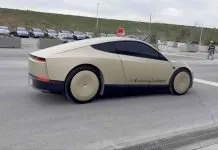








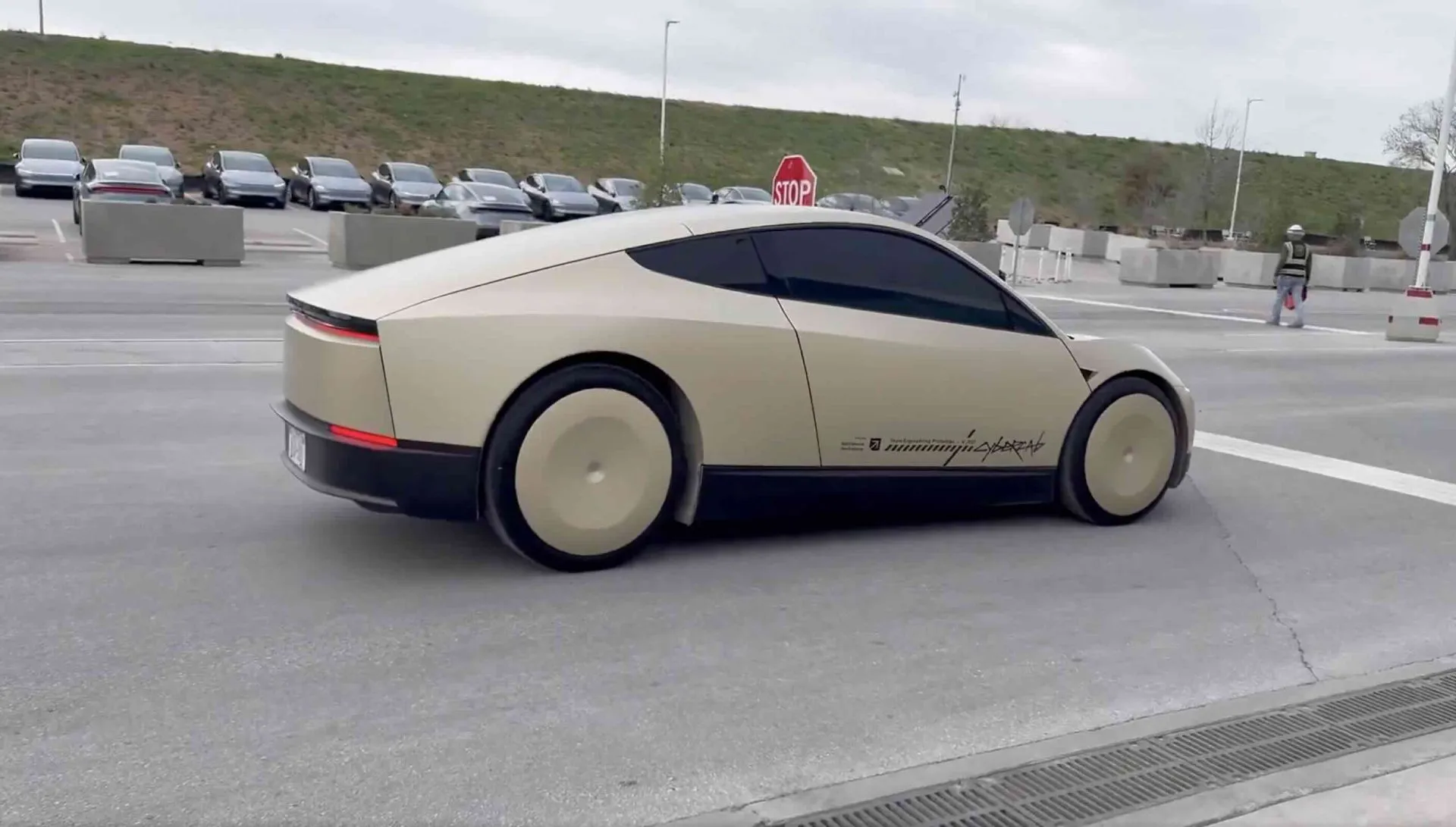
New data from Waymo Q3 2025 rider occupancy is redefining the debate on the design of robotaxi – and it could be the one that clears the controversial two-seat Cybercab in Tesla. The Cybercab has been doubted since its debut in 2024 due to the fact that, with only two seats, it has been viewed as a futuristic vehicle, but now, with the emergence of new information, Tesla has been ahead of the curve.
Toyota Connected Europe designer Karim Dia Toubajie, who reviewed the most recent Waymo reports to the California Public Utilities Commission, indicated a notable pattern: 90% of the Waymo robotaxi travel includes two or fewer passengers. This low-profile yet impactful note is now causing concerns as to why most of the robotaxi initiatives remain dependent on five-seat full-size vehicles.
Toyota Designer Questions the Need for Large Robotaxis
According to the analysis of Toubajie, the occupancy numbers of Waymo are split up as follows:
- 71% of trips have one passenger
- 15% have two passengers
- 6% have three passengers
- 5% have zero passengers
- Only 3% have four passengers
These numbers do not include operational movements such as depot transfers or charging. Simply put, a majority of Waymo robotaxis are big and spacious and thus use most of their time to carry one or two passengers and occasionally none.
Toubajie summarized the issue bluntly:
“90% of robotaxi trips have 2 or fewer passengers, so why are we using 5-seater vehicles?”
Another thing he observed is that this lack of fit means that the vehicle is not efficient. The weight, energy use, and complexity of production of the vehicle are frequently out of scale with the requirements of the rider.
Here's confirmation that Tesla making the Cybercab a two-seater was the right call:
Waymo Q3 2025 occupancy data shows 90% of Waymo robotaxi trips have 2 or less people. @elonmusk pic.twitter.com/7qlUHbCVUh
— Jaan of the EVwire.com ⚡ (@TheEVuniverse) November 27, 2025
Cybercab Suddenly Looks Perfectly Sized
With Waymo’s actual ridership data now confirming what Tesla anticipated, the two-seat Cybercab suddenly looks like a perfectly optimized product for real-world demand. Toubajie even acknowledged Tesla’s foresight:
“The Tesla Cybercab announced in 2024 is a 2-seater robotaxi with a 50kWh battery, but I still believe this is on the larger side of what’s required for most trips.”
The extreme cost efficiency in manufacturing and massive scalability have always been part of the strategy in Tesla. This philosophy is reflected in the Cybercab, which is a minimalist transport pod, a wheel-less, lidar-free, and minimalistic vehicle. The production lines of Cybercabs would be structured more like those of consumer electronics factories than those of conventional automotive plants, according to CEO Elon Musk, enabling high-volume, low-cost production.
Since the demand for robotaxis, overwhelmingly aimed at single riders or two-person cars, the fact that Tesla chose to get rid of the extra seating and vehicle weight now seems not only reasonable but market-oriented.
While 90% of rides fit the Cybercab’s seating layout, the remaining 9–10% of trips that need larger vehicles would still be well-served by existing Tesla models. The Model 3 sedan and Model Y crossover, already mass-produced globally, could easily step into this role. Since both vehicles already run the same Full Self-Driving software stack, integrating them into a unified fleet becomes seamless.