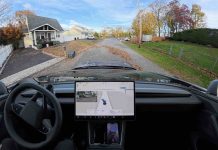
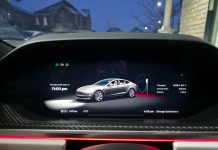
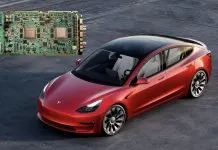


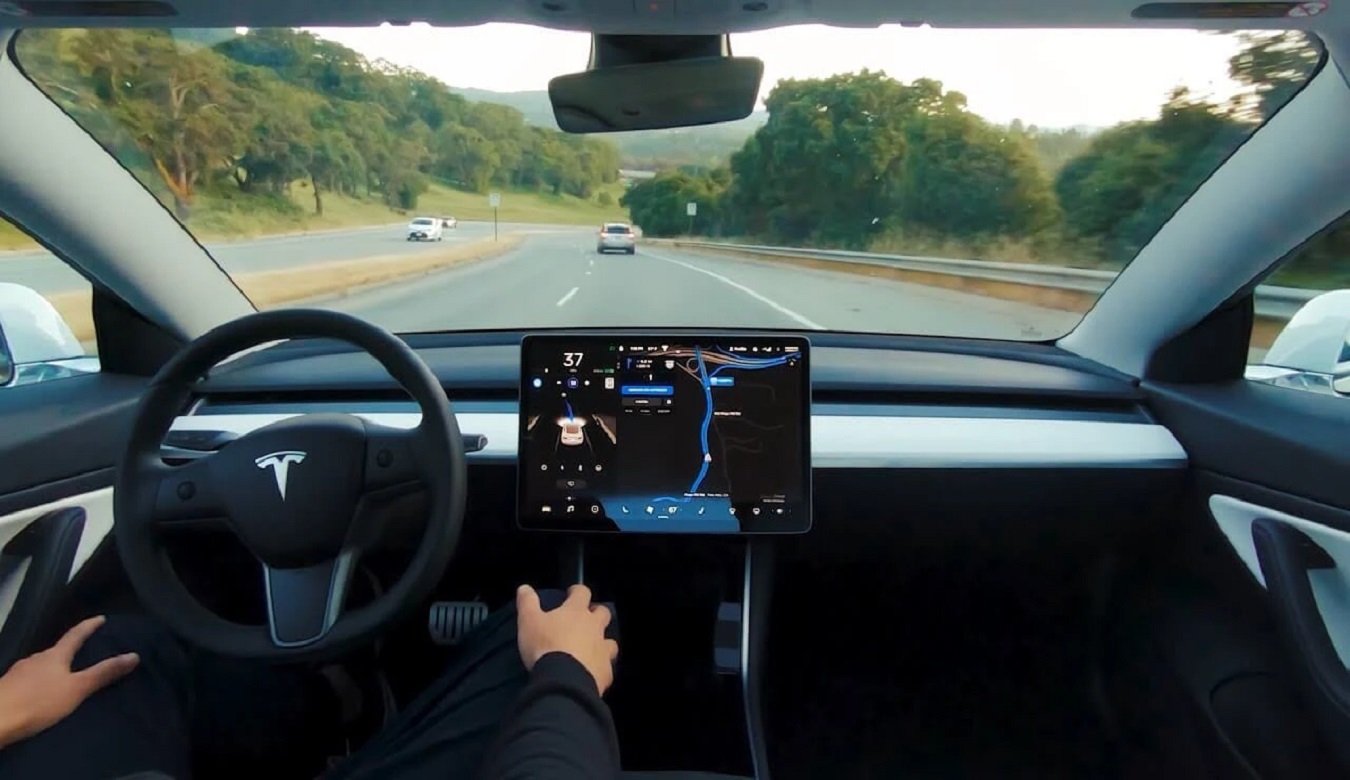
Tesla is still on the border between driver-assist system and complete autonomy, and its new update to the navigation is one of the most common-sense and practical enhancements to date. The company has started taking advantage of the internal cabin camera of the vehicle that is placed above the rearview mirror to identify the number of people occupying a vehicle.
That number is then directly input into the routing engine to enable the Full Self-Driving (FSD) system at Tesla automatically use High-Occupancy Vehicle (HOV) lanes where legally available.
It is an insignificant detail on the paper, yet a rather effective aspect in everyday driving. HOV lanes will save time and decrease congestion, and will encourage carpooling, but drivers tend to be busy switching settings, manually switching on HOV, or just forgetting to switch it on. The automated strategy that Tesla has eliminates all of that: in case your car has the necessary amount of passengers, FSD understands that you are qualified and routes you on a path – hands off, both literally and figuratively.
How It Works
Tesla has been actively installing safety-related cameras in the cabin of its vehicles, like driver attention monitoring and post-alert checks. In this update, the camera consuming onboard processing is used to estimate the count of occupants. None of the images walk out of the car; they are turned into numbers and deleted by the system as the visual data, which preserves the mentioned privacy model of Tesla.
The navigation system dynamically changes the route options once the number of occupants is identified. In case an HOV has a significant meaning of time, FSD will choose it, but only when the vehicle satisfies the occupancy requirement. In case you are driving alone, the vehicle will not just think about HOV lanes and avoid accidental misuse and penalties.
I was wondering how @Tesla would be able to automatically determine when to take carpool lanes and not. It looks like they’re using the camera to detect how many people are in the car. This is wild. pic.twitter.com/PbZXcQLaAn
— Tesla Raj (@tesla_raj) December 10, 2025
A Step in the Right Direction of Context-Aware Autonomy
A wider transformation in the Tesla design philosophy is also mentioned in the update. The company is also incorporating interior context to drive decisions, as opposed to using external sensors and road markings as the sole driving decision-making sources. FSD is not only aimed at driving like a human being, but also to interpret situational rules in the manner that humans do, such as rules about the number of people in the car.
This is essential in the increased Tesla drive towards unsupervised or Level 4-style autonomy. An example of a robotaxi will have to learn its inside world as well as the outside world. The number of passengers influences such decisions as lane qualification, toll charges, or even the qualification of a ride as a completed one. The ability to make use of the in-cabin camera as an everyday-use navigation tool is a light preview of this kind of future use.
Tesla also came up with a warning system on the phone that was left behind in another recent update. When a driver steps out of the car but leaves his phone in the vehicle, the car will detect this and issue an alert. Although the two features have varying uses, there is a common denominator since Tesla is progressively making the cabin an intelligent place instead of a passive one.