
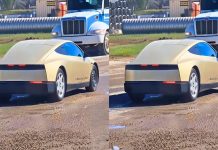
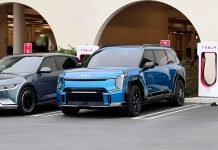
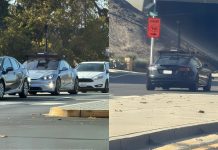

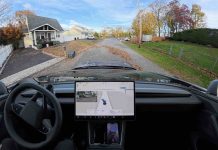


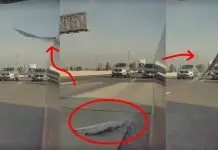





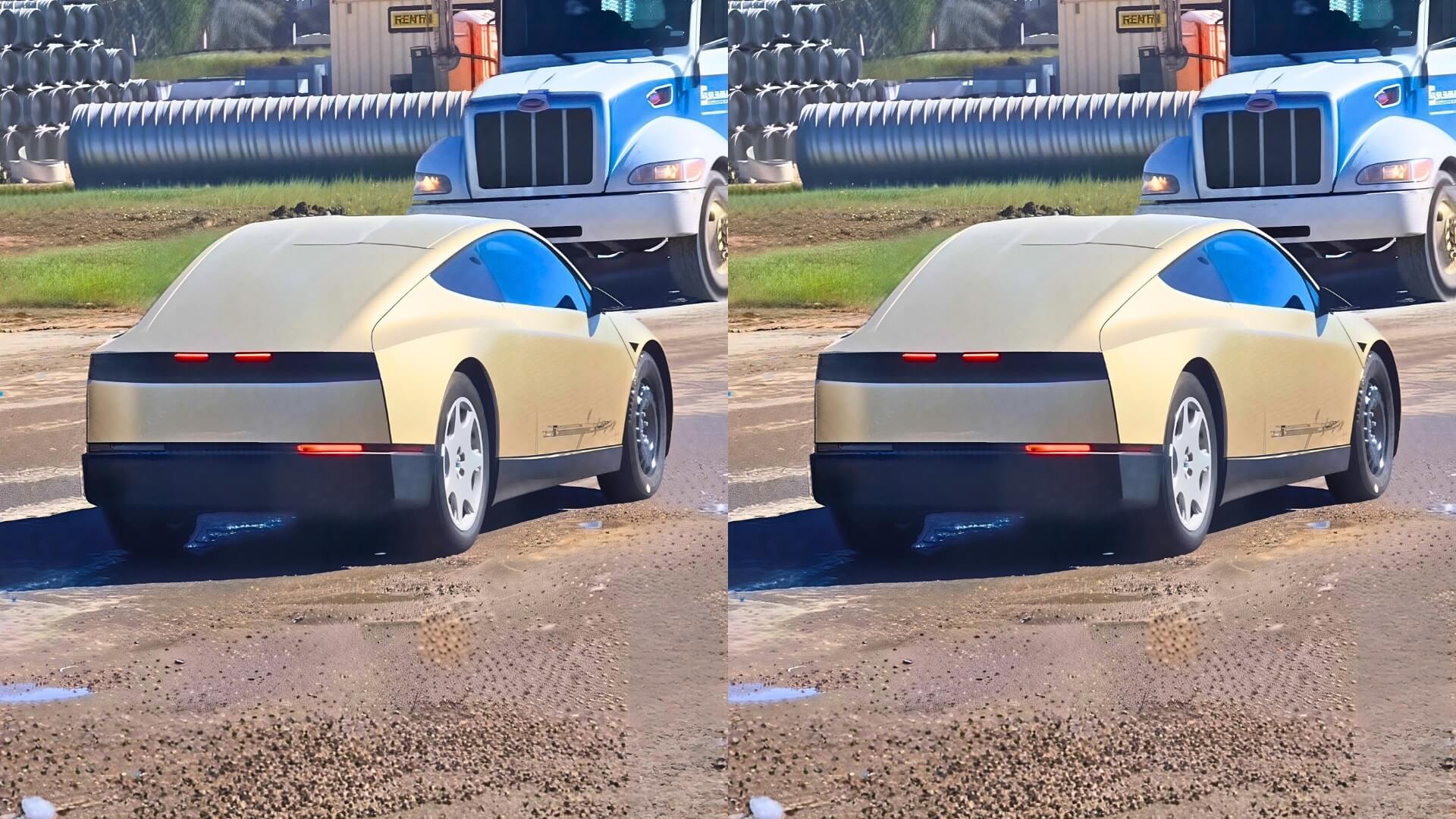
The long-speculated Tesla CyberCab has been allegedly spotted at Giga Texas, providing new details into the company’s plans for autonomous ride-hailing. Although Tesla has not announced detailed specifications, the pictures and sightseeing give sufficient hints on the current level of development of the vehicle. Two highlights from the spy photos: side mirrors and rear lights with a weird dotted look due to a camera rolling-shutter artifact.
Giga Texas has already become one of the most significant manufacturing and development sites of Tesla, which, in many cases, is the pilot project of a new generation of vehicles. The fact that there is a prototype of a CyberCab at the site is an indication that Tesla is proceeding with real-world validation, although the final design may not have been finalized yet. Like in the past Tesla prototypes, the car does not seem to be a finished vehicle; it looks like a work in progress.
The CyberCab is expected to play a significant role in Tesla’s long-term, larger autonomous plan, especially its vision-based Full Self-Driving (FSD) system and subsequent robotaxi system.
Side Mirrors: A Practical Testing Choice
The use of conventional side mirrors is one of the most striking things about the spotted prototype. This fact is important since Tesla has often spoken extensively of its camera-focused attitude to perception of the vehicle, and a large number of futuristic concept cars do away with mirrors completely in favor of digital camera displays.
But the addition of side mirrors is a real indication that this CyberCab must be at a test or regulatory compliance stage. Use of physical mirrors on the roads is still a legal requirement in most areas. Tesla can test the vehicle in public or semi-public roads without colliding with regulatory barriers by retaining it. It also gives engineers the chance to work on autonomous system refinement without having to address approval issues associated with mirrorless designs at the same time.
This is not to say that side mirrors will be included in the final design of CyberCab. Rather, they probably are the expediency of compromising in early development.
Understanding the Dotted Rear Lights
Another detail that can be noticed is the dotted or segmented shape of the rear lights in the images and videos. This could appear as an unusual lighting setup or even a failure at first sight. As a matter of fact, it is more probable that it is a rolling shutter effect of the camera employed to record the video.
Rolling shutters are used in most smartphones and digital cameras to capture an image in line format instead of capturing the whole image at once. When capturing flickering LED lights with a particular frequency, it may provide a dotted or dashed effect in the end result. The lights, as such, are normal to the human eye, but the camera sensor sees them differently.
Conclusion
The sighting of the CyberCab supports the idea that Tesla is slowly transforming its autonomous aspirations from software prototypes into actual, purpose-built automobiles. Although the company already implements FSD capabilities in consumer vehicles, a special autonomous car would give Tesla an opportunity to design and locate hardware and keep costs down, specifically to work as a driverless vehicle.
Having said that, the prototype state of the vehicle keeps reminding us that a commercial release still has some time. The design aspects may vary a lot before production, and the regulations of full autonomous vehicles are a big challenge across the globe.