






For the first time in years, Tesla is no longer the market leader in the European electric vehicle market. In 2025, Volkswagen officially surpassed Tesla as the largest electric vehicle manufacturer in the region, a significant milestone for the legacy automaker in the region. Although Tesla had two of the three best-selling spell EVs, the wider and more balanced range of Volkswagen was the decisive factor.
According to Dataforce figures mentioned by Automotive News, Volkswagen sold 274,417 electric cars in the European Union, the United Kingdom, and the EFTA countries (such as Norway and Switzerland) last year. This is a 56% year-on-year growth, which is enough to overtake Tesla and take the number one position among EV makers in Europe.

Tesla’s Strong Models Weren’t Enough
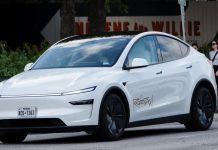
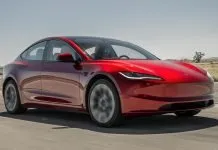
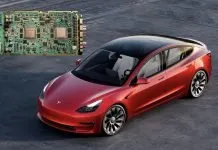
The story of Tesla’s performance is more complex. In 2025, the American carmaker sold 238,765 EVs in Europe, which is 27% fewer than in 2024. Although the Model Y was still the highest-selling EV in Europe based on 151,331 units, its sales declined by 28% compared to the year before. The Model 3, in its turn, ranked as the 3rd in general with 86,261 units, which is a 23.6% decrease.
These figures highlight the increasing challenge for Tesla in Europe. Unlike Volkswagen, Tesla relies heavily on just two high-volume models, leaving it more exposed to demand fluctuations, pricing pressure, and intensifying competition.
| Rank | Brand | 2025 Sales | % Difference vs. 2024 |
| 1 | Volkswagen | 274,417 | 56% |
| 2 | Tesla | 238,765 | -27% |
| 3 | BMW | 193,186 | 15% |
| 4 | Skoda | 172,100 | 117% |
| 5 | Audi | 153,848 |
VW’s ID Lineup Delivers a Collective Win
What’s worth noting is that not all the EVs of Volkswagen made the sales podium separately. Rather, the synergistic combination of the ID.3, ID.4, and ID.7 was what drove the German car manufacturer to the winning point. The ID.3 hatchback was targeted at urban customers, the ID.4 kept on reaching crossover clients, and the ID.7 sedan and wagon helped VW to expand into higher-end markets.
This diversification contributed to Volkswagen performing better on cumulative volume than Tesla, with no single bestseller. It also points out one of the important strengths that legacy automakers have started to regain, namely, scale in the range of vehicle categories.
The success of Volkswagen is particularly remarkable considering the bumpy initial steps in EVs. Initially, the ID.3 and ID.4 received much criticism due to faulty software, slow infotainment, and irritating touch features. Those problems hurt the EV image of VW during the launch and slowed early adoption.
Nevertheless, those issues have been fixed over the last several years. New software updates have been majorly responsive and usable, and the customer feedback indicates that new models simply work. Buyers have also appreciated the reintroduction of physical buttons to some of the necessary functions, such as window controls, as it is also over-digitized on the inside.
Volkswagen is also not stopping here. Based on the experience of its first-generation EVs, the company is in the process of introducing cheaper vehicles, such as the ID. Polo and ID. Polo Cross. It is anticipated that these vehicles will focus on the mass-market consumers and may further disconnect VW and Tesla in Europe, where price elasticity is still very strong.