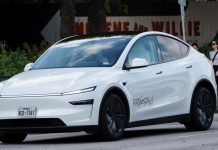

Within the last few days, Elon Musk’s Tesla has geared up to revolutionize urban transportation with the unveiling of Robotaxi (or Cybercab) at the “We, Robot” event held on October 10, 2024. Elon Musk presented this autonomous electric vehicle, which doesn’t require a human driver, marking a significant leap in Tesla’s Full Self-Driving (FSD) technology.
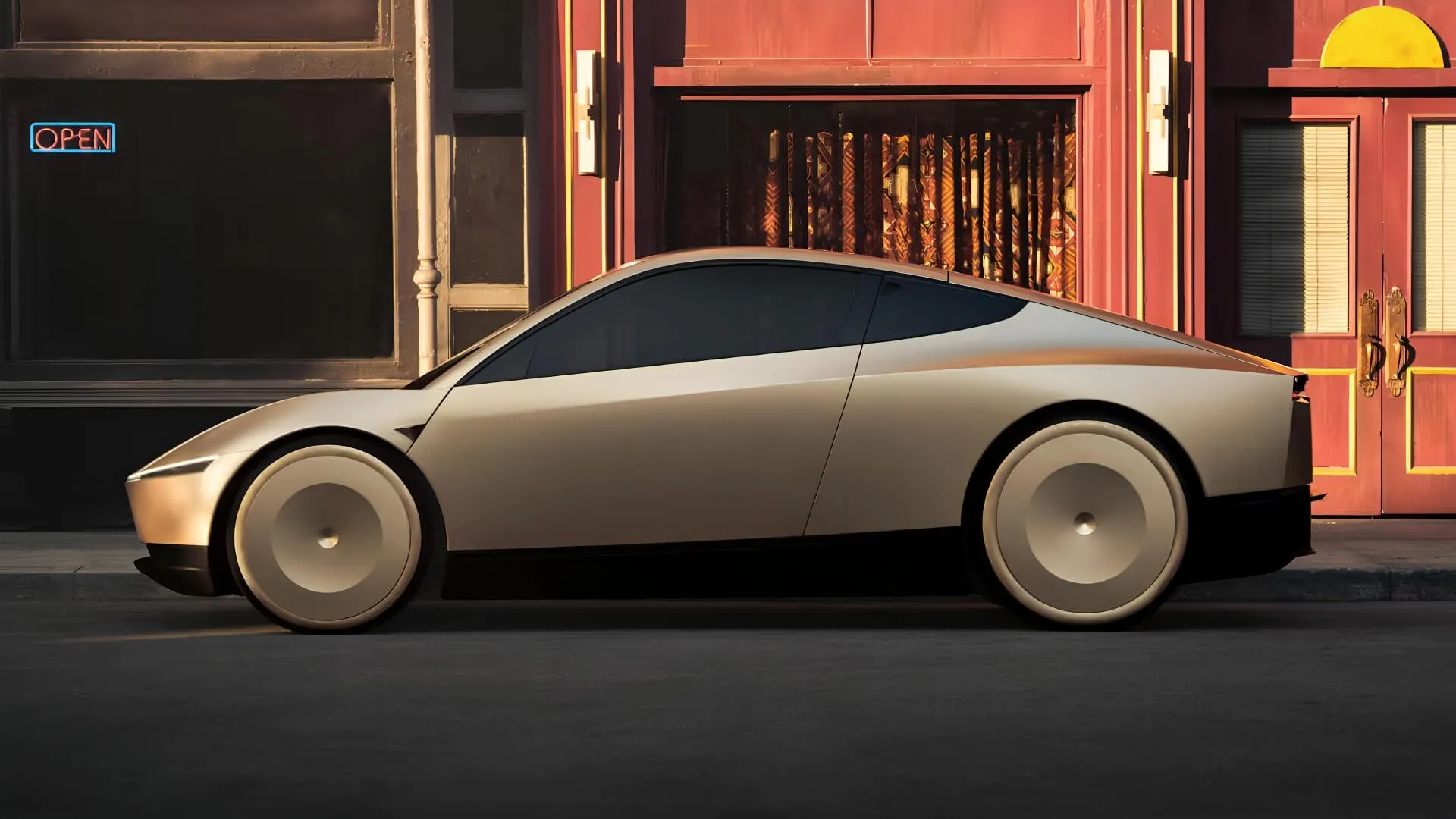
Table of Contents
All HW3 Teslas Are Equipped for Robotaxi with FSD
Level 5 autonomous vehicles do not require human input for driving or decision-making. This applies to the Robotaxi as well, which has been a part of Musk’s vision for nearly a decade. Tesla’s concept includes self-driving taxis, ordered via an app similar to Uber. Tesla owners can also share their vehicles as part-time taxis through the Tesla Network when not in personal use.
Lars Moravy confirms that all HW3 Teslas will run FSD (Unsupervised) which will allow them to function as a Robotaxi.
All HW3 vehicles will soon be capable of becoming a Robotaxi with Level 5 autonomy, transforming how Tesla develops its self-driving cars. This leap is enabled by the new FSD v12.5 update, which is compatible with HW3 vehicles. Tesla’s director Ashok Elluswamy has stated that FSD on HW3 now performs at the same level as it does on newer HW4 hardware.
@larsmoravy confirms FSD with hardware 3 is Robotaxi ready!
— Kim Java (@ItsKimJava) October 13, 2024
Design and Features
The concept vehicle, named Cybercab, embodies the look and feel of a futuristic car, without traditional controls like a steering wheel or pedals. Its standout features include butterfly doors and a compact cabin designed for two passengers. It is expected to retail for under $30,000, with production starting before 2026. This positions Tesla in the same market segment as other autonomous services, such as Waymo and Cruise, which utilize LiDAR technology.
Transitioning to Unsupervised FSD
One of the most significant advancements is that FSD in all HW3 Tesla vehicles will soon operate without human supervision. This development means these vehicles can drive autonomously without human control, and Musk expects it to be available in California and Texas markets next year for newer models.
Currently, FSD operates in a supervised mode where the driver must be ready to take over at any moment. This requires monitoring systems, such as hands-on-wheel detection and in-cabin cameras. However, with upcoming updates, HW3 vehicles will be able to function without any driver oversight.
Challenges Ahead
Several concerns surround this development, especially from Robotaxi fans and enthusiasts. Fully self-driving cars require legal approval for public road use, which is critical for widespread implementation. Tesla’s FSD technology has been controversial due to safety concerns related to its Autopilot system, which has been involved in numerous accidents. Questions remain regarding its performance in challenging driving conditions, particularly as competitors like Waymo and Cruise enter the autonomous vehicle market.
Tesla Robotaxi Revenue Model
Tesla is gearing up to revolutionize transportation with its upcoming Robotaxi Network. Tesla owners will soon be able to add their vehicles to this network through the Tesla app, transforming their cars into autonomous, revenue-generating assets. In regions where coverage is lacking, Tesla will deploy its own Robotaxi fleet to fill the gaps.
Tesla owners will be able to add their cars to the Tesla Robotaxi Network using the Tesla app.
For areas without enough coverage, Tesla will operate their own Robotaxi fleet.
This is going to happen, and it's going to profoundly change the world. pic.twitter.com/8a4PbBLaEO
— Tesla Hype (@TeslaHype) August 10, 2023
Elon Musk’s bold prediction that owners could earn up to $30,000 annually has sparked considerable excitement. This initiative promises not only to redefine ridesharing but also to reshape urban mobility, creating a future where autonomous vehicles dominate the streets.
The Future of Transportation
Musk’s Robotaxi is more than just a vehicle—it’s a representation of Tesla’s commitment to AI-driven transportation. The “We, Robot” event attracted a large audience, including selected shareholders and influential figures. Musk emphasized that the value of Tesla lies in autonomation, reinforcing his vision of Tesla Motors as an AI robotics company that happens to manufacture cars.
The potential impact of Tesla’s autonomous Robotaxis on cities cannot be overstated. Musk’s pipeline includes other models like the Robovan, capable of carrying more passengers, further advancing his vision for transportation. Despite legal and technical uncertainties, Tesla’s Robotaxi is poised to be a pioneering force in the rapidly evolving world of self-driving vehicles.
As Musk continues to push boundaries, the international community is watching to see if this ambitious vision will become a reality.